Nearly 99% of Serra dos Reis State Park in the Brazilian Amazon has remained intact for four decades. But protecting it costs far more than existing public funding can provide. A new pilot explores whether maintaining the park’s ecological integrity could become a source of revenue and what it would take to make that model financially viable.
Key messages
• Conservation is a recurring fiscal responsibility without sufficient dedicated funding. Effective management of Serra dos Reis State Park in the Brazilian Amazon is estimated to cost US$565,000 annually, but existing public financing falls short.
• A new mechanism could enable protected areas to generate revenue by maintaining their ecological integrity. The Serra dos Reis pilot demonstrates how management effectiveness, ecological connectivity and threatened fauna can be used to calculate approximately 37,534 conservation performance units annually.
• The pilot establishes a methodology and identifies a legal pathway, but commercial viability remains untested. The next step is to establish buyer demand, pricing and whether the resulting revenue could sustainably finance conservation.
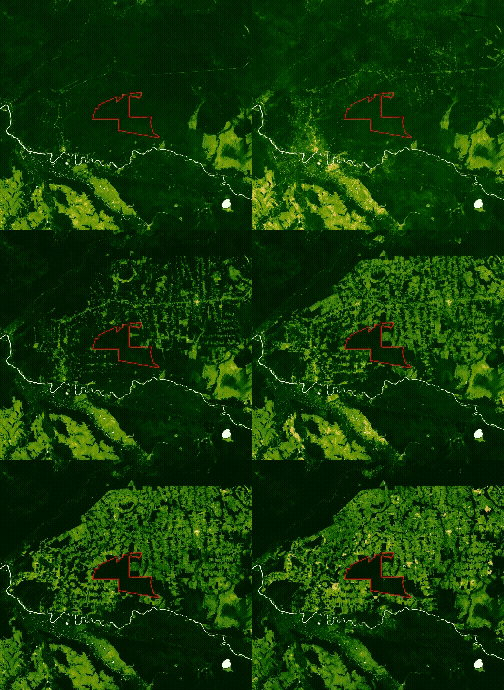
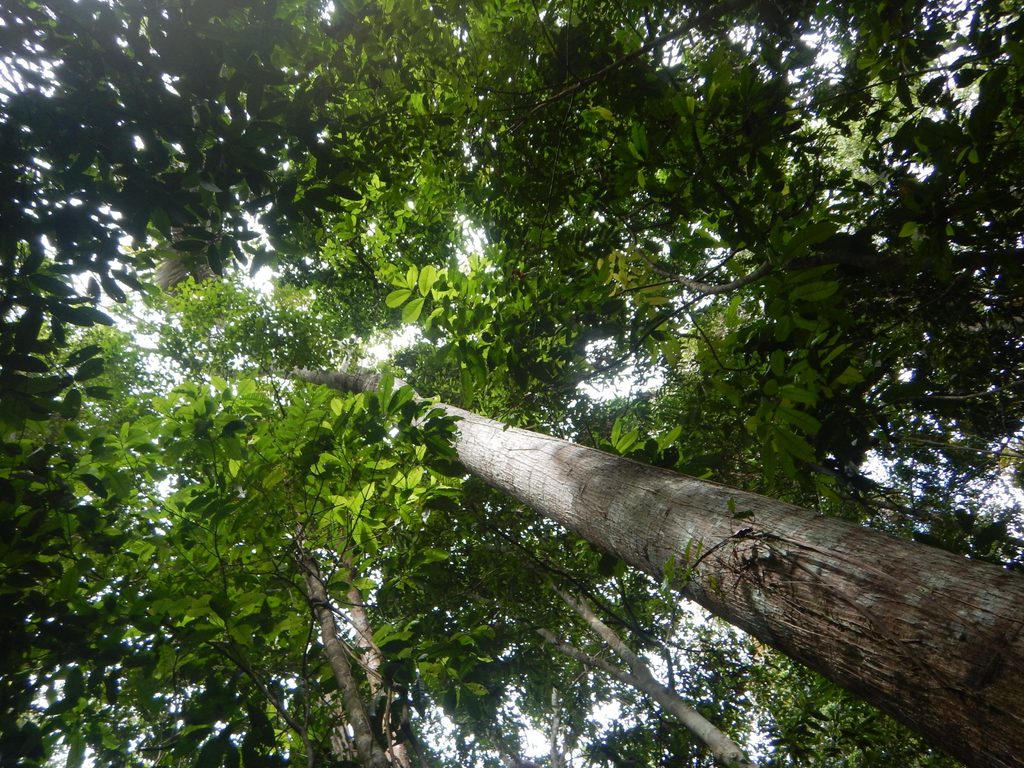
Four decades of satellite imagery reveal a striking contrast at Serra dos Reis State Park in the Brazilian state of Rondônia. While much of the surrounding landscape has been cleared for pasture, nearly 99% of the park has remained natural habitat since 1985 when satellite monitoring started. Today, it forms an important part of the ecological corridor connecting forests across the Guaporé Valley and into neighbouring Bolivia.
But keeping it that way requires sustained investment. Effective management is estimated to cost US$565,000 a year, significantly more than the funding currently available through the state budget and a federal protected areas programme.
This financing gap reflects a broader challenge across the Amazon. State governments are legally responsible for maintaining protected areas, but conservation competes with other public spending priorities and rarely generates a dedicated revenue stream.
A new conservation finance study by NatureFinance and the Brazil Amazon Consortium is among the first outputs of an initiative launched at COP30. Using Serra dos Reis as a pilot, the study assesses a mechanism through which protected areas could receive payments for maintaining their ecological integrity, based on measurable conservation performance.
The approach could have implications well beyond Rondônia. Across Brazil’s nine Legal Amazon states, 27 protected areas covering more than 8.9 million hectares have been identified as potentially eligible for the same mechanism.
Why existing conservation funding falls short
Established in 1995, Serra dos Reis covers 36,400 hectares and is classified nationally as an area of highest priority for conservation. As a strictly protected area under Brazilian law, it permits only indirect uses, such as research and visitation. Management is the responsibility of the Rondônia State Secretariat for Environmental Development.
For a park of this size, the study estimates that effective management requires at least 16 professionals, alongside the infrastructure, monitoring and operational resources needed to maintain its ecological integrity.
The park currently relies on two main sources of funding: allocations from the Rondônia state budget and support from the federal Amazon Region Protected Areas Programme (ARPA).
ARPA’s Transition Fund supports field operations but does not cover staff salaries, essential infrastructure or the Secretariat’s institutional costs. These expenses must therefore be met through other sources, principally the state budget, where conservation competes with other public spending priorities. Payroll, debt service, mandatory transfers to municipalities and constitutionally required spending on health and education all limit the resources available for discretionary expenditure.
This is not an isolated problem. A study published in Environmental Conservation found that 72% of the 300 federal protected areas examined had a funding deficit in 2023. In the Amazon, the average shortfall reached 79.2%. Comparable data have not yet been published for state-run strictly protected areas, but the findings point to a wider problem in how conservation is financed.
“When an Amazonian state looks at its budget, a park appears only on the expense side. It generates no revenue, yet it is a permanent legal obligation. That is why this discussion has moved from the environment department to the finance secretariats. This is not an environmental agenda that has been given funding; it is a fiscal problem that states have carried for decades without a solution,” says Luana Maia, Global Brazil Lead at NatureFinance.
Financing conservation through measurable performance
The mechanism developed by NatureFinance and the Brazil Amazon Consortium proposes a different approach to conservation finance: protected areas could generate a financial asset based on their measured conservation performance, creating a potential source of revenue beyond existing public budget allocations. The approach builds on the principle of payments for ecosystem services, which gained support during Brazil’s G20 presidency.
Rather than attempting to assign a monetary value to the forest itself, the methodology measures the ecological integrity that a protected area maintains. It calculates an annual quantity of conservation performance units by multiplying the area of eligible natural habitat by three factors: management effectiveness, ecological connectivity and the presence of threatened animal species.
The calculation relies on existing public databases, allowing the same methodology to be applied across different protected areas while reflecting their individual ecological characteristics.
“The idea is to give the buyer a verified, auditable record that the park has kept its ecological integrity intact. The additionality lies in the fact that protecting the area requires resources that do not currently reach it. Without this funding, management effectiveness falls and the decline shows up in the official indicators. The purpose of the payment is precisely to sustain protection and prevent that decline,” explains NatureFinance economist Gustavo Martins.
The approach differs from carbon credits, where a tonne of carbon dioxide has the same atmospheric effect regardless of where it is emitted or avoided. Biodiversity is not interchangeable in this way. An intact hectare connected to other protected areas and supporting threatened species has different ecological characteristics from an isolated forest fragment. The methodology’s three factors are designed to reflect these differences.
The proposed mechanism would reward the continued maintenance of existing ecosystems, rather than relying on hypothetical scenarios of future loss. Conservation performance would be verified annually, with payments linked to the ecological integrity maintained.
What the Serra dos Reis pilot demonstrates
The first phase of the pilot confirmed that Serra dos Reis meets the mechanism’s eligibility criteria, including strict protection status, well-conserved natural habitat, a minimum level of management effectiveness, no recorded land tenure conflicts and no overlap with other projects.
The study then calculated the park’s potential annual generation of conservation performance units using three factors.
1. Management effectiveness. Rated moderately effective by Brazil’s SAMGe system, with a score of 52.2%, Serra dos Reis receives a neutral multiplier of 1.00.
2. Ecological connectivity. The park’s ecoregion has a connectivity index of 24.56%, roughly twice the global reference average, resulting in a multiplier of 1.046.
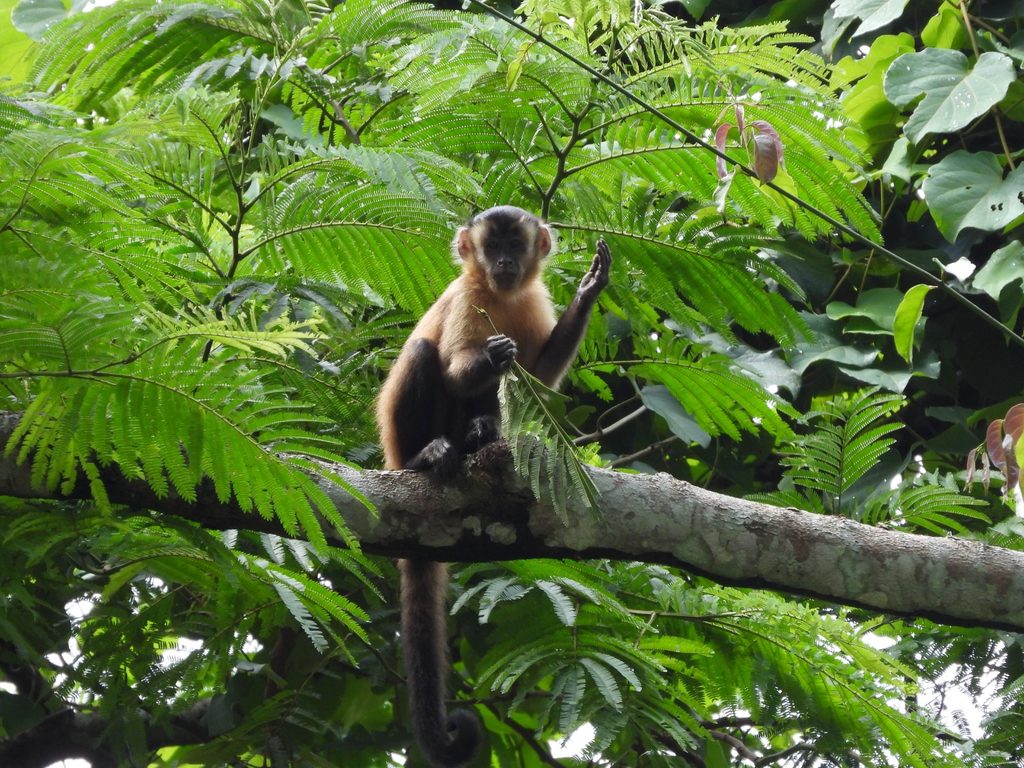
3. Threatened fauna. The multiplier remains at 1.00 because official databases do not yet fully reflect threatened species recorded in the park.
Applied to Serra dos Reis, the calculation is:
35,876 hectares × 1.00 (management) × 1.046 (connectivity) × 1.00 (fauna) = 37,534 conservation performance units annually.
This establishes the quantity of units the park could potentially generate each year. Their financial value would depend on the price buyers are willing to pay, which has not yet been established.
“The calculation uses only what is in the official databases,” says Martins. “Threatened species already recorded at Serra dos Reis do not yet appear in these records, so today’s figure can still improve. Keeping these records up to date is part of the management work the mechanism is designed to fund.”
Crucially, the proposed mechanism would allow Serra dos Reis to generate finance from its conservation performance without changing its public ownership or protected status. It is grounded in Brazil’s National Policy on Payment for Environmental Services, established by Law 14,119 of 2021. A legal assessment found no obstacle to the park’s participation, although further work is needed to verify land title and clarify ownership of the proposed financial assets.
“Serra dos Reis State Park was chosen because it meets the eligibility criteria defined for the nine states of the Legal Amazon and reflects the challenges faced by most protected areas. We need to test the model in the real world,” says Vanessa Duarte, Executive Secretary of the Brazil Amazon Consortium. “What we learn will pave the way for the other states to adapt it to their own circumstances.”
The next test: will buyers pay for conservation performance?
The Serra dos Reis pilot has demonstrated how Amazon conservation finance could be built around measurable ecological performance, while identifying a legal pathway for issuing the resulting assets. What remains untested is whether there is a market for them.
The next phase must identify potential buyers, establish what they would be purchasing and determine whether demand and pricing could generate sufficient revenue to support the park’s management costs.
If successful, the approach could offer Amazonian states a new way to finance the ongoing management of protected areas, recognising the ecological benefits they maintain while reducing their dependence on constrained public budgets.