A bio-based chemical approved for sale in one Southern African country can still need fresh certification before it reaches manufacturers across the border. Multiply that friction across the 16 member states of the Southern African Development Community (SADC), each with its own standards, classifications and sectoral priorities, and the region’s bioeconomy starts to look less like one market than sixteen small ones.
The result is a regional mismatch: Southern Africa’s biological resources do not stop at national borders, but the rules governing what can be made from them do. This mismatch is visible in the trade data, where despite SADC’s long-standing ambition to build an integrated market, only around a fifth of the region’s trade stayed within SADC in 2025.
In our previous blog, we argued that Africa’s bioeconomy already exists and that the real question is who captures its value. For Southern Africa, the answer depends on how well its member states coordinate. This is why, as our new report and policy brief make clear, no SADC member state can build competitive bio-based industries alone.
Zimbabwe’s mandatory fuel blending has already created a national market for sugarcane ethanol. Coordinated blending requirements across SADC could turn that into a regional market, giving investors the certainty to supply growing demand for sustainable aviation fuels.
The timing matters. South Africa, which chairs SADC until August 2027, aims to develop a regional bioeconomy strategy by June 2027, and the East African Community is already implementing one. Global demand for sustainable, decarbonised supply chains and bio-based products is also accelerating, which favours regions that organise early.
With the political commitment in place, attention now turns to what the strategy must deliver: coordination, certification, infrastructure and investment pathways that let bio-based firms operate across the region as easily as the biomass they depend on.
Fragmented policies mean fragmented investment signals
Most SADC member states already have policies relevant to the bioeconomy, but they lack harmonisation. Differences in standards, product classifications and sectoral priorities create barriers to cross-border trade, and unclear definitions cause confusion in implementation.
Insect frass, a fertiliser produced from insect-based waste processing, can count as legal compost in one country and animal waste in the next, which effectively blocks trade. Tariff structures that favour raw over processed agricultural products further discourage local value addition.
These inconsistencies raise costs and uncertainty for investors in industries that already take years to commercialise. Mutual recognition of standards and more consistent trade rules would give investors a clearer regional signal and lower the risk of backing bio-based businesses, creating the conditions for growth.
Regional integration can achieve economies of scale
Small national markets struggle to sustain the specialised facilities bio-based industries depend on, but serving a regional market changes that. Despite its small domestic market, Botswana plays a leading role in animal vaccine production across Southern Africa. Shared regional infrastructure could extend that model, spreading the cost of testing laboratories, certification bodies and processing facilities across a larger market.
A model for sharing research capacity already exists. The Southern Africa Network for Biosciences (SANBio) lets more than a dozen member states share laboratory facilities and expertise that individual countries might lack. Coordinated public and development finance could build on this foundation to improve commercial viability and draw in private investment.
Scale also depends on specialisation. If every SADC member state builds the same processing capacity, none will reach the volumes needed to compete. The stronger approach is for each country to build on its own comparative advantages toward a shared vision of a SADC bioeconomy, so that national strategies add up to a coherent regional whole.
South Africa’s experience shows why this matters. Its first bioeconomy strategy, published in 2013, cast a wide net, and its focus has since narrowed to sectors with clear private sector appetite, mostly focused on bio-technology applications across forestry, agriculture and sugarcane.
Applied across SADC, the same discipline would let capabilities across the region complement rather than duplicate one another.
Positioning the bioeconomy within industrial policy
The bioeconomy offers SADC a transformative pathway to stronger economic resilience and inclusive growth, yet bioeconomy policy has traditionally sat with science and environment ministries. Building competitive bio-based industries depends on trade rules, industrial incentives and finance, which makes the bioeconomy a whole-of-government economic and industrial strategy, with ministries of finance, trade and industry sharing ownership..
Six sectors offer the strongest potential for growth and resilience.
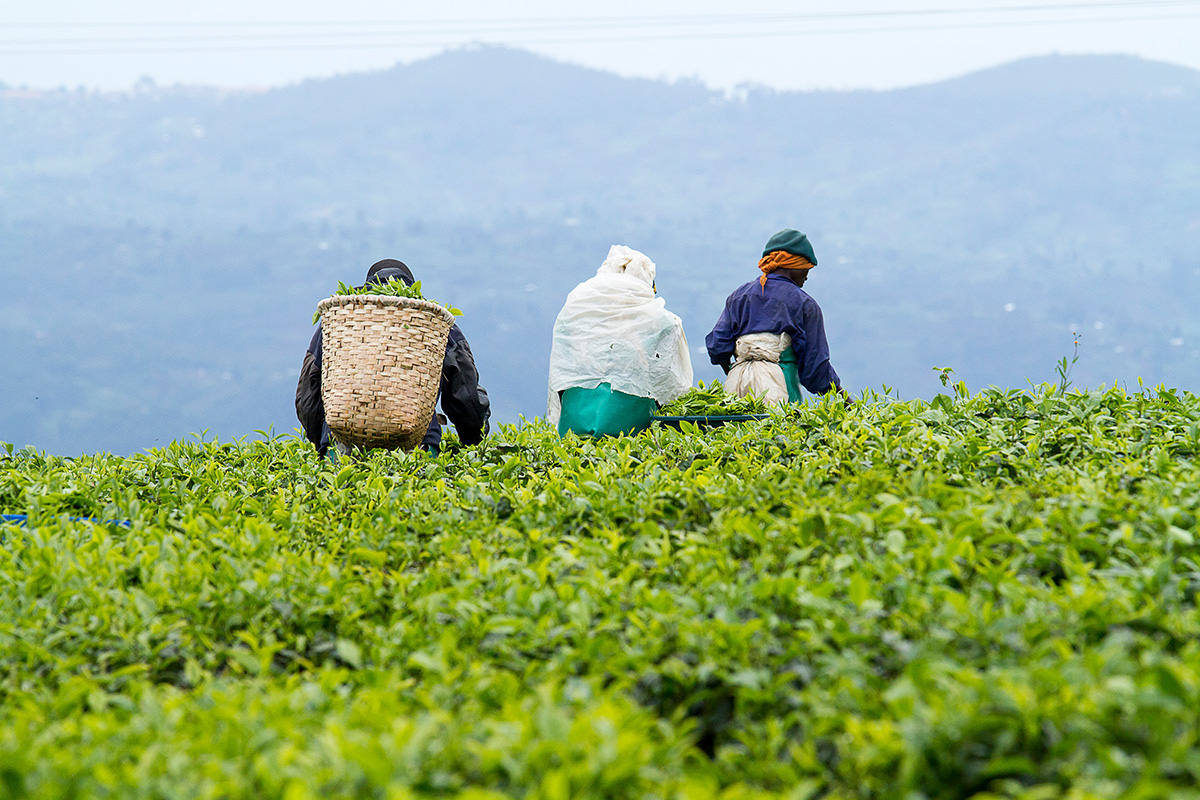
Agriculture, agroprocessing and food systems form the region’s largest sector, with room to add value and protect producers from climate and price shocks. Biotechnology and bioprocessing offer the region’s highest-value opportunities, with bioenergy strengthening energy security. The blue economy can generate coastal jobs and support food security, whilst the circular and waste economy creates new urban industries. The wildlife-based economy, worth an estimated 4.6% of SADC GDP, turns conservation into rural income through tourism and natural products.
Built on renewable biological resources and labour-intensive jobs, these sectors can provide SADC a route to scaled green industrialisation that leapfrogs carbon-intensive models instead of replicating them.
Four priorities for a regional bioeconomy strategy
A regional strategy will only change outcomes if it gives firms and investors something concrete to act on. Four priorities would move SADC from shared ambition to shared markets, building on policy levers that already exist across member states.
1. Map regional bio-based value webs
A single feedstock can yield multiple products, with by-products from one process supplying another. Mapping these value webs across borders would show where regional competitive advantages, producers, processing facilities and markets connect. This would give a clear picture of where regional processing capacity should be built and how to build incentives to enable greater investment.
2. Develop industrial clusters that retain local value
Processing hubs and transport links can connect smallholders to industrial markets. Sappi’s Southern African grower network has grown from five growers in the 1980s to around 4,500 smallholders supplying about 500,000 tonnes of timber a year. Building bio-based industries into SADC’s planned corridors could extend that model across the region.
3. Strengthen market access for bio-based innovations
Research capacity does not automatically become industry. Southern Africa already develops promising bio-fertilisers, bio-based packaging and pharmaceuticals, but many lack the offtake agreements or public procurement needed to scale. Shared biotech and data platforms, backed by regional procurement commitments, could give innovators the first demand and wider markets they need.
4. Aggregate smaller enterprises for financing
Many bioeconomy enterprises are too small to reach development finance on their own. Brazil’s Amazon Bioeconomy Fund shows one answer, using a national development bank to group small businesses into portfolios large enough for multilateral lenders. A regional platform such as the African Bioeconomy Finance Hub could play that role for SADC.
A window that closes in June 2027
The foundations for regional coordination are already in place. National bioeconomy-related policies are widespread, and the four pillars of the SADC Industrialisation Strategy and Roadmap align closely with the bioeconomy: productive capacity, competitiveness, regional integration and sustainable resource use.
Naming the bioeconomy explicitly within it would be the quickest way to signal regional intent. What the June 2027 deadline calls for is a shift in ambition, from scattered sectoral policies to a bioeconomy built into the region’s economic planning.
The real test of a regional strategy will be whether it removes practical obstacles for firms. One tangible measure is whether a bio-fertiliser certified in Lusaka can enter the market in Lilongwe without repeated testing. When that becomes routine, Southern Africa’s bioeconomy will start to function as a single market.
Explore the series
Africa’s bioeconomy already exists. The question is who captures its value
Why keeping more of the value of Africa’s biomass on the continent is the central test of a fair bioeconomy. Read the blog →
Investing in Southern Africa’s bioeconomy
Our flagship report, developed with support from the African Climate Foundation and research support from The Nature Conservancy, African Leadership University and auctusESG, examines how greater coordination across SADC can turn biological resources into higher-value industries and jobs. Read the report →
The case for a regional bioeconomy strategy in Southern Africa
Why regional coordination is essential for building scale, aligning standards and creating the conditions for investment. Read the brief →
From agricultural production to bioeconomy value creation in Africa
How African economies can move further up agricultural value chains and retain more of the economic gains from what they already produce. Read the brief