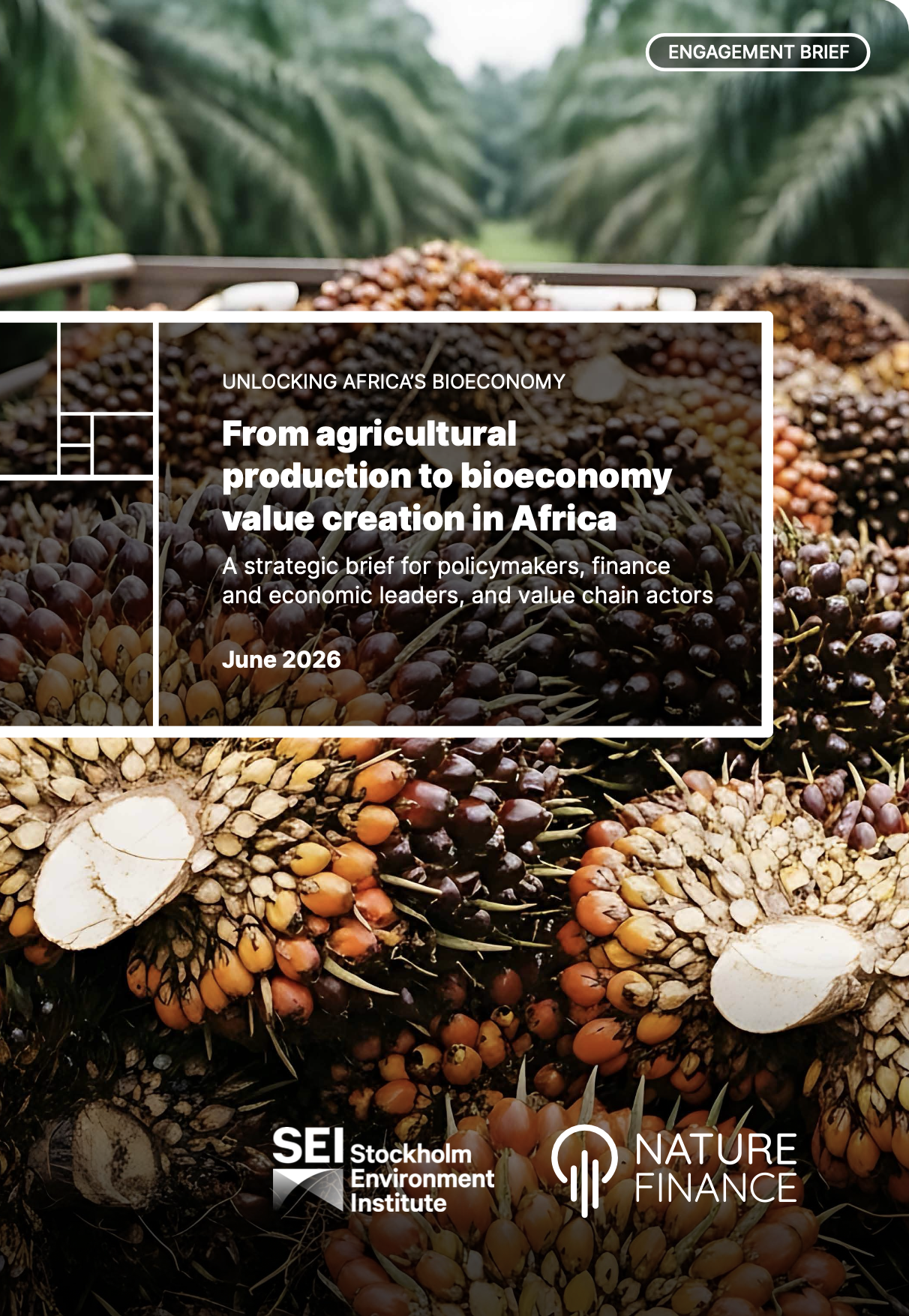
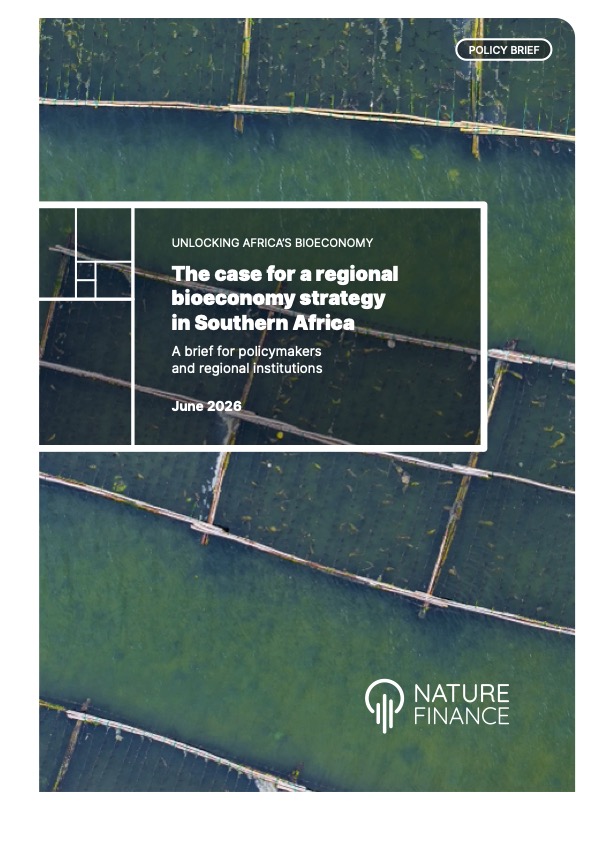
This report is part of NatureFinance’s Unlocking Africa’s Bioeconomy series, which explores how African countries and regions can move beyond resource extraction toward value addition that strengthens economic resilience, supports nature-positive growth and attracts investment. It builds on The case for a regional bioeconomy strategy in Southern Africa, which sets out the rationale for coordinated regional action, and From agricultural production to bioeconomy value creation in Africa, which examines how more value can be retained from the continent’s biological resources.
At a time of growing climate volatility and global economic uncertainty, investing in Southern Africa’s bioeconomy offers a strategic response to some of the region’s most pressing structural challenges. As a super El Niño and renewed fertiliser shortages increase pressure on food systems, public finances and economic resilience, the Southern African Development Community (SADC) has an opportunity to leverage its biological assets to build resilient, bio-based industries for the future.
The bioeconomy offers a transformative pathway for SADC to leapfrog carbon-intensive development models, strengthen economic resilience, and deliver inclusive growth for people and the planet. It is not a niche environmental agenda, but a whole-of-government economic and industrial strategy that can help shape a new regional development model.
Where the opportunity lies
Six sectors present the strongest opportunities for growth, resilience and investment, building competitiveness around renewable biological resources rather than carbon-intensive models.
• Agriculture, agro-processing and food systems is the dominant sector in the region and offers significant potential for building climate resilience and higher-value processing.
• Biotechnology and bioprocessing offers the greatest opportunity for high-value manufacturing and export earnings. Africa’s biotechnology markets are projected to grow to US$ 138.2 billion by 2030.
• Bioenergy and biofuels offer significant energy security and competitive trade advantages, with Africa’s bioenergy market projected to reach US$ 17.6 billion by 2035.
• The blue economy offers pathways to diversify beyond terrestrial agriculture, create coastal employment and harness nature-based climate solutions. It offers the potential to support 57 million jobs across Africa by 2030.
• The circular and waste economy remains a major untapped opportunity, with significant potential to transform waste streams into higher-value inputs across regional industries. With 50% of waste currently organic, SADC has a unique leapfrogging opportunity to pioneer waste valorisation.
• The wildlife-based and biodiversity economy can be leveraged through investment in the SADC’s ecological infrastructure as a productive asset. The sector already contributes an estimated 4.6% of SADC GDP and many of the policies also speak explicitly to indigenous knowledge valorisation.
Why this matters
Global demand for sustainable, nature-positive products and supply chains is accelerating rapidly. SADC members that diversify into bio-based industries now can build genuine comparative advantage, deepen domestic value addition and become a market shaper in fast-growing international sectors.
Unlocking the bioeconomy’s transformational potential requires regional action. Countries acting alone face higher costs and weaker bargaining power, but together they can pool finance, share infrastructure and harmonise standards. A coordinated regional strategy can unlock economies of scale, deepen value chains, and position Southern Africa as a competitive hub in the global green economy.
Key recommendations
1. Develop a dedicated SADC bioeconomy framework to align national policies, investment priorities, and standards.
2. Name the bioeconomy explicitly in the SADC Industrialisation Strategy and Roadmap (SISR) 2015–2063.
3. Build regional bioeconomy corridors and clusters to support cross-border value chains.
4. Pool expertise and finance for shared R&D platforms, biorefineries, centres of excellence, and Bioeconomy Special Economic Zones (SEZs).
5. Use regional diplomacy to position SADC as a competitive global supplier of sustainable bio-based products.
Contact and more information
For content enquiries, contact Monique Atouguia, Senior Consultant, Global Africa.
For media and communication enquiries, contact nfcommunications@naturefinance.net.